15.07.2026
Industrial and logistics demand is holding firm. But shrinking Grade A supply means cost management matters more than ever
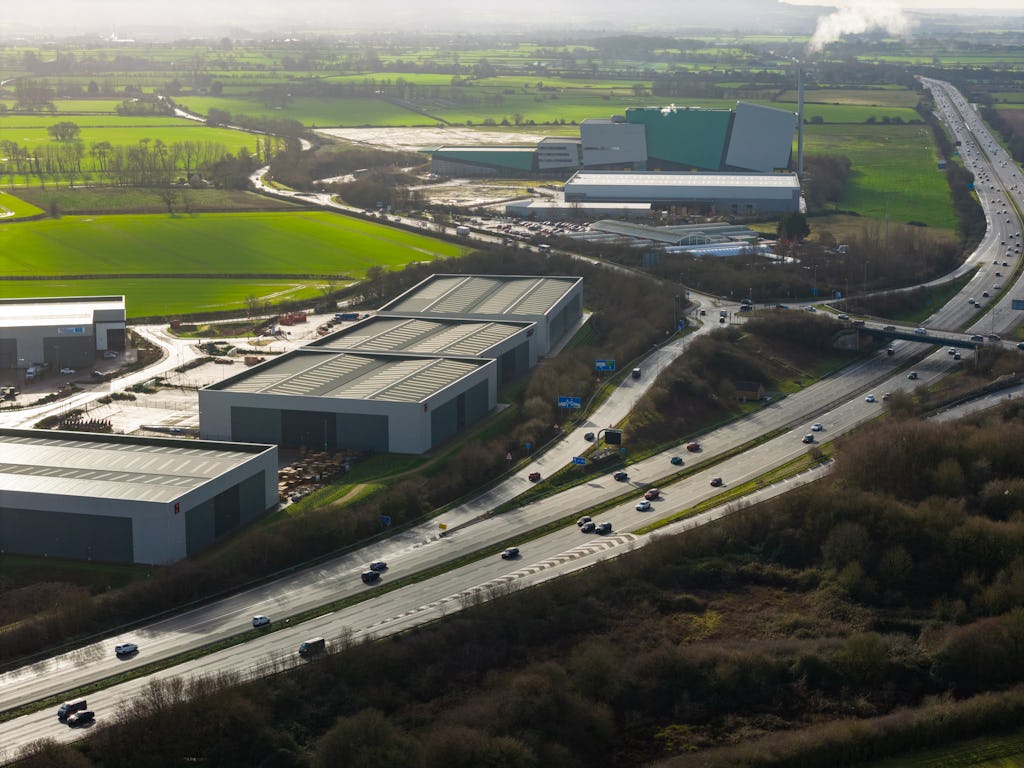
The UK industrial and logistics market has shrugged off a year of geopolitical noise. Despite the fallout from conflict in Iran, tariff disruption, and a change of Prime Minister, occupier demand has held up. According to new research from Savills, 15.7 million sq ft of logistics space was transacted across the UK in the first half of 2026, with Q2 alone up 15% on Q1. Given everything else going on, that’s a pretty resilient number.
But the more interesting story for anyone involved in delivering these buildings isn’t the demand side. It’s what’s happening to supply, and in particular to the quality of stock available.
The Grade A squeeze
Total industrial and logistics supply across the UK now stands at 64 million sq ft, down 39 basis points on the quarter to a vacancy rate of 7.76%. Developers and investors who’ve spent the last two years watching vacancy climb will welcome that. But look closer and the real pressure point becomes clear: Grade A supply has fallen to 35.1 million sq ft, just 55% of the total and the lowest proportion since Q3 2023.
The picture’s starker still at the top end of the market. Supply of units over 400,000 sq ft has fallen 5% since Q3 2025, even as take-up of existing big sheds has surged. Savills reports that take-up of standing units over 400,000 sq ft reached 4.3 million sq ft in H1 2026, up 139% on the same period last year. There are currently no standing units of that size under offer at all.
Meanwhile, the speculative development pipeline that would normally replenish this stock is running at 63% below its 2022 peak. Build-to-suit activity remains subdued too, accounting for only 10% of take-up so far this year, though a healthy pipeline of BTS requirements suggests that could change over the next 12 months.
Put simply, occupiers want quality space, there’s less of it coming through, and the schemes needed to fill the gap aren’t being committed to at the rate the market needs.
Why this matters for cost management
For those of us advising on cost management and quantity surveying across industrial and logistics schemes, this combination of factors changes the risk profile of every project on the table.
Viability gets tighter, not looser.A falling vacancy rate and rising Grade A demand should, in theory, support rental growth and give developers more confidence to commit. But with construction cost inflation still a live issue and a smaller pool of speculative schemes moving forward, there’s less margin for error on any given development. Robust early-stage cost planning, realistic contingency, and disciplined procurement are what separate schemes that get built from schemes that stall at appraisal.
Materials and supply chain risk hasn’t gone away. The wider context here, including disruption around the Strait of Hormuz and its knock-on effect on oil prices and inflation, is a reminder that global shocks can still ripple through construction costs with little warning. The Bank of England is now forecasting inflation to peak at 3.3% this year, up from a 2.5% forecast made as recently as November. Cost plans need to build in that volatility rather than assume it away, particularly on schemes with long lead-in periods for structural steel, cladding, and M&E plant.
Build-to-suit needs cost certainty from day one. If, as Savills suggests, BTS activity picks up over the next 12 months to meet the requirements already in the market, occupiers committing to bespoke schemes will want early and accurate cost appraisal before they sign. That puts a premium on QS input at feasibility stage, not just at tender.
Second-hand stock is an underused lever. With 76% of take-up this year accounted for by Grade A units, older and lower-grade stock is being left behind even as vacancy falls. That’s a genuine opportunity for refurbishment and retrofit projects to bring second-hand buildings up to a specification occupiers will accept, at a fraction of the cost and programme time of a new build. Getting the cost appraisal right on these schemes, balancing refurbishment spend against achievable rents, is likely to become a bigger part of the conversation over the next few years.
Regional pressure isn’t evenly spread. The combined East and West Midlands accounted for 60% of UK take-up in H1 2026, the highest proportion Savills has ever recorded. For developers and occupiers active in the region, that means competition for sites, contractors, and Grade A stock is likely to be sharper here than almost anywhere else in the country. Anyone appraising a Midlands scheme right now needs cost data that reflects local market conditions, not national averages.
The bottom line
None of this points to a market in crisis. Take-up remains healthy, occupier requirements and viewings are both trending up, and Savills’ own leading indicators suggest underlying demand is stronger than the headline year-on-year figures imply. But a tightening Grade A supply picture, a smaller speculative pipeline, and continued cost volatility mean the schemes that do proceed need to be appraised and managed with real discipline.
That’s where cost management and quantity surveying earn their keep: giving developers, investors, and occupiers the confidence to commit in a market where the numbers matter more than ever, and where getting them wrong is a far more expensive mistake than it was two years ago.
To find out how we can help you, get in touch with us and find out more about our cost management expertise here