07.04.2026
Five reasons construction projects overspend (and how to prevent them)

Cost overruns on construction projects are common enough to feel unavoidable. However, they rarely are. The same five causes appear repeatedly and all of them are manageable, with the right team in place from the start.
The BCIS All-in Tender Price Index rose 2.8% year-on-year in Q1 2026. Labour costs are up 7.1% on the year. Subcontractor pricing has tightened across all sectors. In this environment, the margin for cost management error is thin, and the consequences of getting it wrong are increasingly severe. Yet the most common causes of project overspend have little to do with market conditions. They are caused by structural failures in how projects are set up, estimated, and managed. And they appear on schemes of every size, across every sector.
Wakemans’ cost management team works across industrial and logistics, hotels and leisure, residential, and commercial and public sector development. The following five causes account for the overwhelming majority of construction projects’ overspend we encounter, and we believe that all of them are preventable.
- Cost plans built on optimism, not evidence
The most common root cause of final account overrun is a cost plan that was never realistic. Feasibility-stage estimates built from analogous projects without proper adjustment for specification, location, ground conditions, or market timing create a budget baseline that the project can never actually meet. By the time a contractor is appointed and the true cost picture emerges, the client has already committed to funders, to planning authorities, to a business case. A cost plan is only as good as the data and assumptions behind it. At Wakemans, we build cost plans from current market evidence and site-specific analysis, not headline benchmarks applied without adjustment.
- Scope creep with no change control
Every project changes. The question is whether those changes are controlled. On projects where change control is weak, where instructions are issued without agreed cost and time impacts, where design development is not tracked against the cost plan: the gap between budget and outturn grows silently. By the time it becomes visible, it is too late to recover. A RICS 2024 survey found that 70% of final account disputes could have been avoided with earlier contract education and notice compliance. Change control is not bureaucracy; it is the mechanism that keeps the cost plan honest.
- Procurement that prioritises price over risk
Appointing the lowest tenderer without interrogating their price is one of the most reliable routes to a disputed final account. A tender that is materially below market levels is not a saving; it is a risk that has been accepted without being priced. Contractors who win on unrealistically low bids recover margin through variations, delay claims, and contract notices. A robust tender analysis done via comparing rates against market data, challenging gaps in preliminaries and assessing methodology as well as price, is how cost consultants earn their fee at the procurement stage.
A tender that’s 15% below the market rate isn’t a saving. It’s a programme risk, a variation claim, and a disputed final account waiting to happen.
- Ground conditions and hidden existing conditions
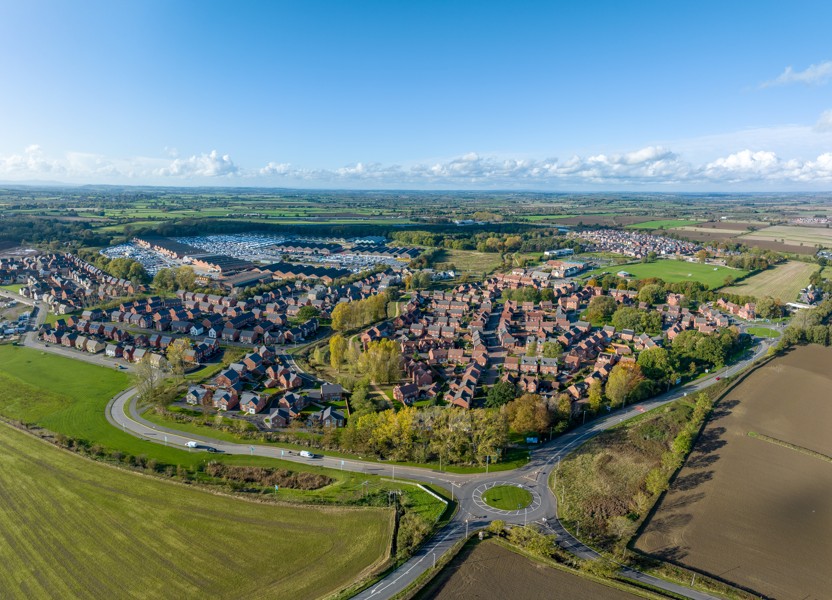
Ground conditions are the most frequent source of legitimate unforeseeable cost, but only when the investigation was inadequate. A desk study is not a thorough ground investigation. A preliminary ground investigation is not always sufficient for a complex brownfield site. On the Pets at Home distribution centre at Stafford, where Wakemans acted as Employer’s Agent and Cost Consultant, the upfront investment in thorough site investigation and infrastructure planning, including a new roundabout on the A34, was built into the cost plan from the feasibility stage. On projects where that rigour is absent, ground conditions that could have been identified and budgeted become unforeseeable events, with all the contractual consequences that follow.
- A cost consultant appointed too late
The value of a cost management team is greatest in the earliest stages of a project: feasibility, brief development, and procurement strategy. A QS appointed after planning consent is already working with a design that is partially fixed, a programme that has been shaped without commercial input, and a budget that may have been set by people who were not cost professionals. Proactive QS’s brought in at early project planning, reported measurable improvements in cost certainty and reduction in final account disputes. At Wakemans, we work with clients from pre-planning through to final account across all sectors because that is where our value lies.
Cost overruns are not inevitable. They are the predictable consequence of insufficient planning, inadequate oversight, or the wrong team in the room. Each of the five causes above has a known remedy and implementing those remedies consistently is what cost management is for. Wakemans provides cost management and quantity surveying services from feasibility through to final account across a variety of sectors. Speak to our team about your next project here: wakemans.com/expertise/cost-management