Project overview
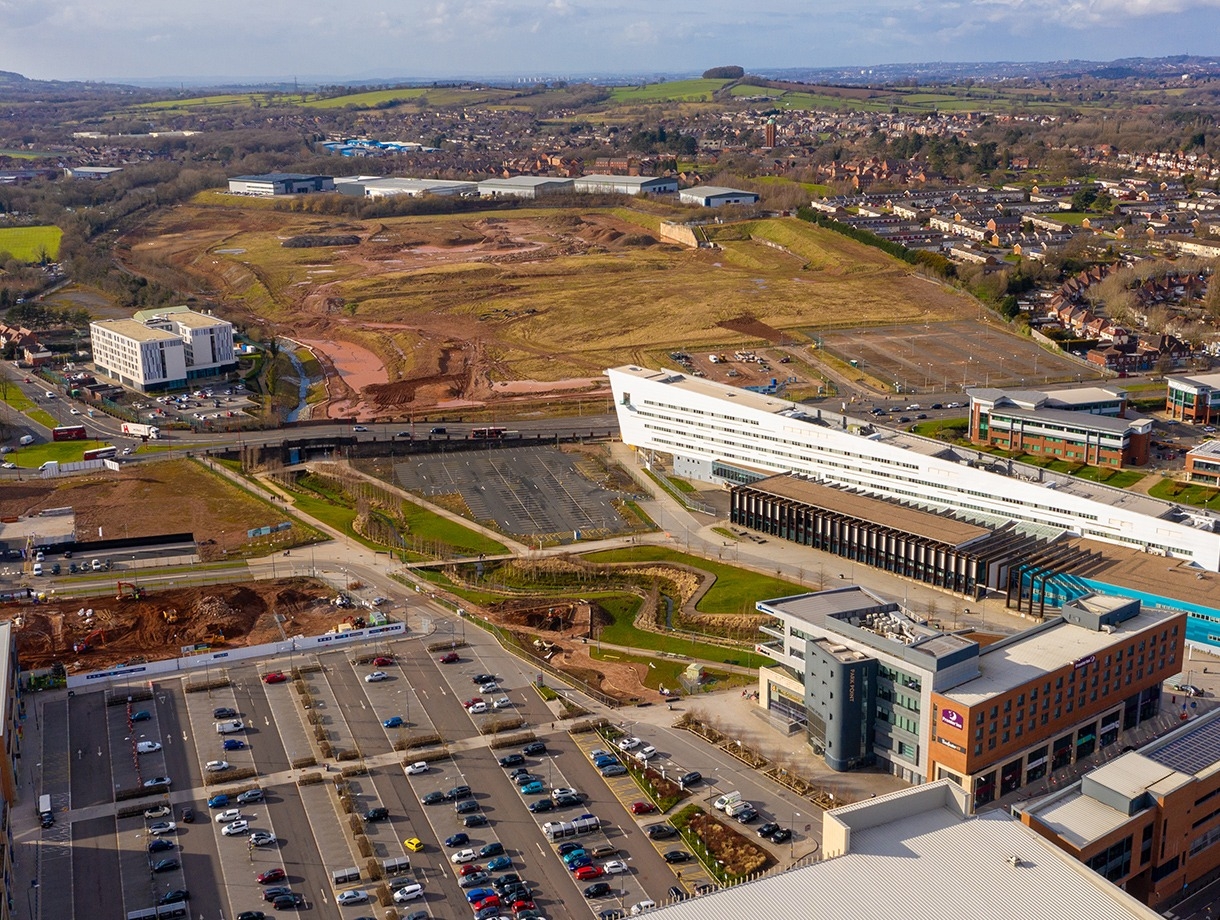
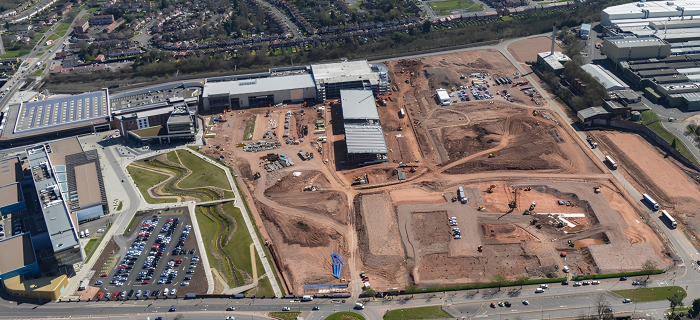
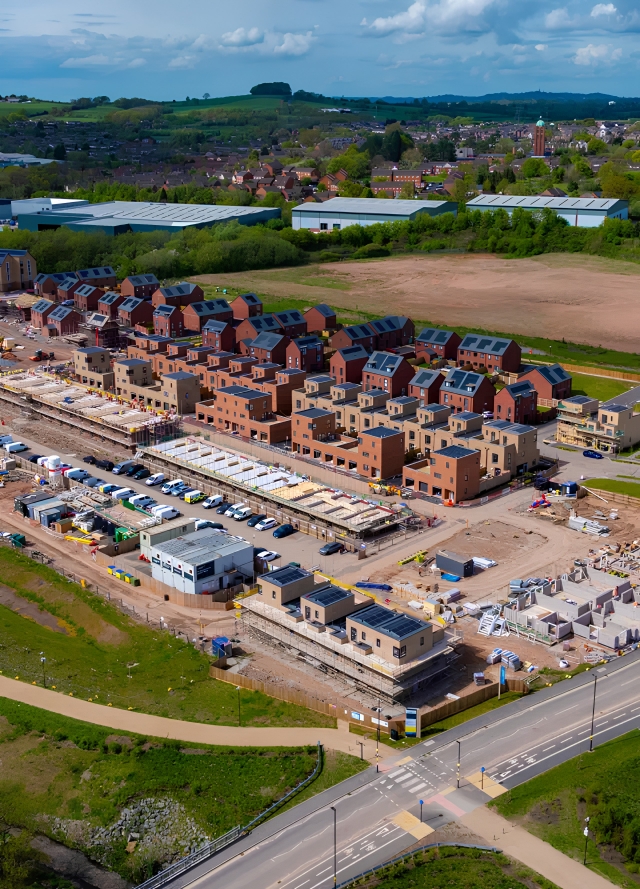
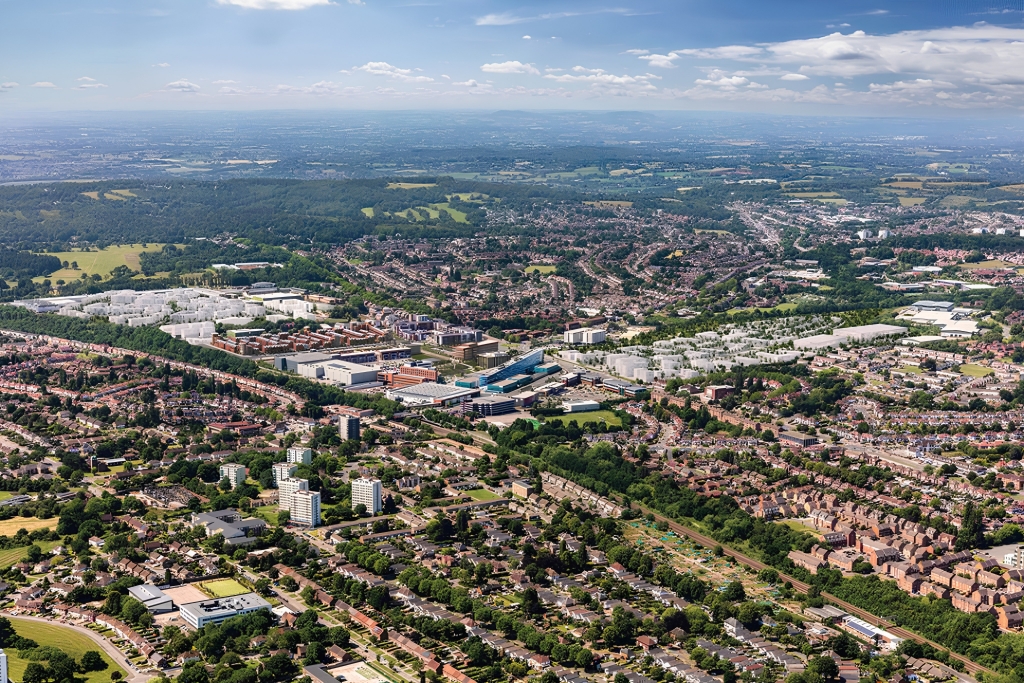
The redevelopment of the former MG Rover car plant at Longbridge is one of the largest brownfield regeneration schemes in the country, re-purposing a 500-acre site of national industrial significance following its closure in 2001. The wider scheme, which totals circa 3,000 homes alongside industrial units, community space and public realm across 11 land sale parcels, built out by three different housebuilders under 10 separate construction contracts includes Wakemans’ own direct appointment covering all major infrastructure and circa 1,400 homes. Wakemans provided Project and Cost Management, Employer’s Agent and Principal Designer services since 2018, working with Master Developer St Modwen and latterly Indurent, alongside a variety of stakeholders.
The Challenge
The site was constrained by the dual carriageway into Birmingham, established residential neighbourhoods and a live, operating factory that had to continue manufacturing throughout the early works. Existing high voltage, water and gas infrastructure serving the plant needed to be diverted without interrupting production, while a sitewide asbestos strip and phased demolition had to be sequenced around a working cut line through the factory. Delivering serviced land to three housebuilders across 11 parcels and 10 construction contracts, to challenging financial year end targets, required disciplined phasing and close coordination across a wide group of stakeholders.
Wakemans Approach
- Masterplanning and Funding: on engagement in 2018, Wakemans project managed the planning and design team through eight potential masterplan options across two parcels totalling approximately 150 acres, moving the site’s strategy away from a business park towards residential-led development. Each option was priced, programmed and worked into phased delivery strategies with the wider engineering team, informing project appraisals presented to the planning department, local councillors and MPs. Wakemans then worked with the Master Developer to secure grant funding from the West Midlands Combined Authority, enabling infrastructure to be brought forward in a single phase rather than relying on future land sales for funding.
- Service Diversion, Demolition and Asbestos Removal: Wakemans procured asbestos surveys ahead of the works and coordinated directly with Nanjing Automotive to divert a high voltage ring main, a large water main and a new gas main within a two-week summer shutdown window, avoiding any interruption to the ongoing manufacturing process. The sitewide asbestos strip and phased demolition ran for over 60 weeks, with cleared areas handed back progressively while other structures were retained for future re-use, all coordinated with the CDM team to secure air clearance before releasing areas back for occupation.
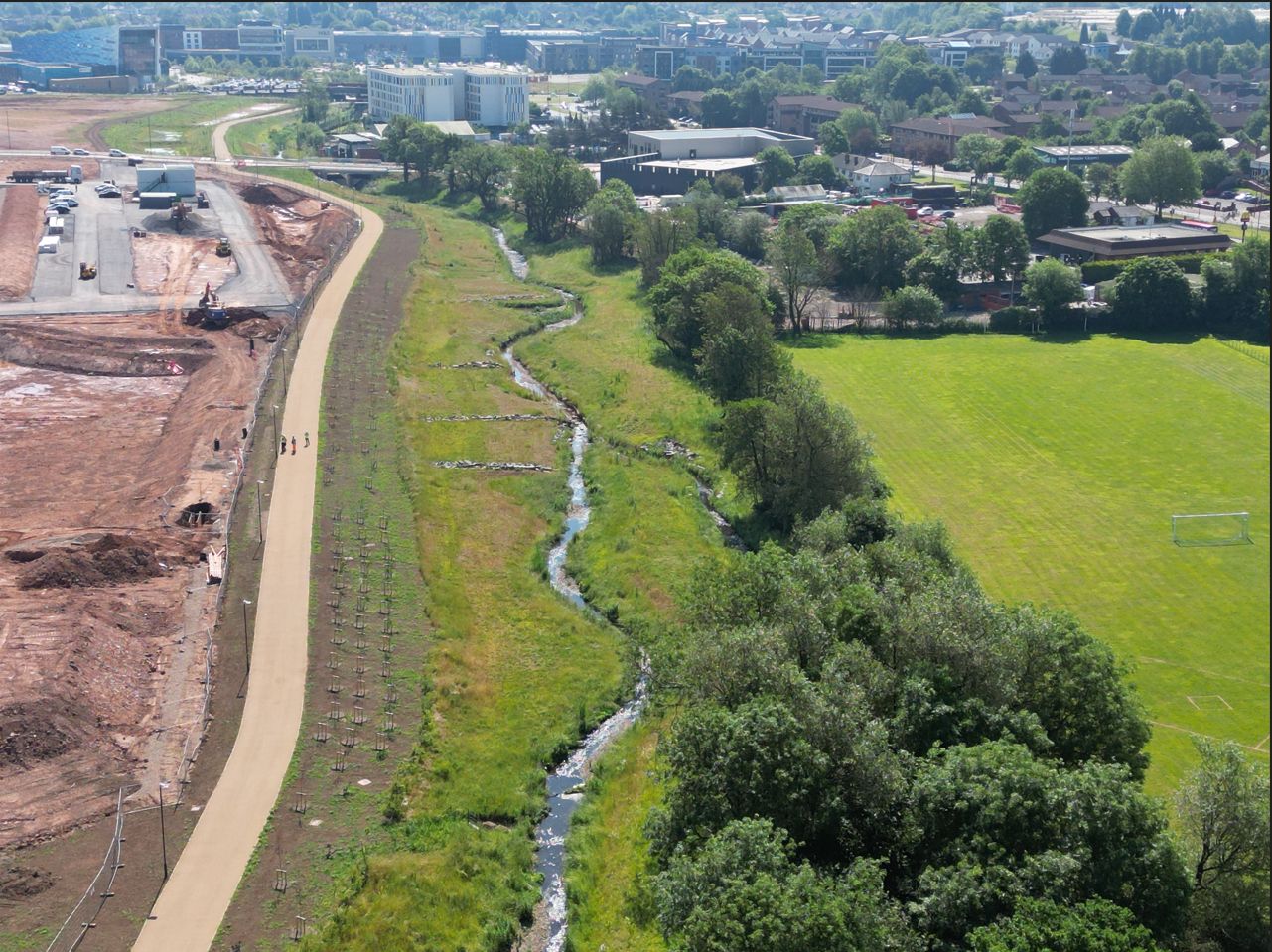
- Highways, Bridge, Drainage and Utilities: Wakemans secured technical approval from Birmingham City Council and Severn Trent Water for a sitewide spine road providing a drainage and services corridor, connecting to the dual carriageway at both ends via a new signalised S278 junction. The corridor was designed to be fully LTN 1/20 compliant, with a 7.3m carriageway, footways and a separate cycleway, and included bellmouth connections into future plots for adoption. Where the road crossed the River Rea, a 25m precast concrete bridge was delivered to DMRB standards and approved by the council. Environment Agency approval was secured for drainage outfalls into the river, and a 6m deep drainage connection beneath the A38 Bristol Road was completed by auger boring. Wakemans oversaw utilities delivery by Murphy Group, including a new transformer at the primary substation providing up to 20MVA of capacity, together with offsite works bringing high voltage, gas and water to the site boundary.
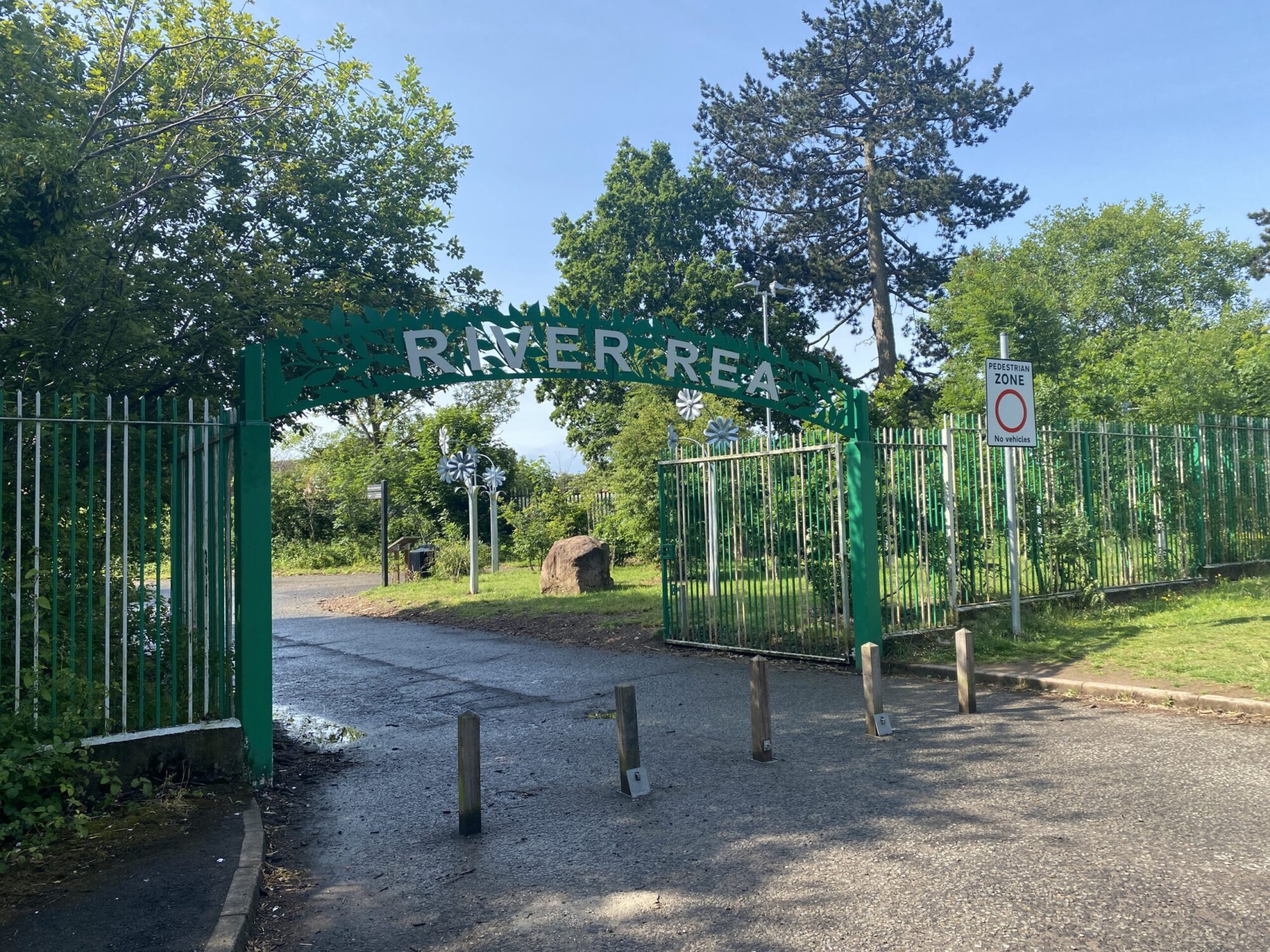
- Remediation and Public Realm: Wakemans oversaw the management of an extensive network of basements beneath the site, stripping and deep cleaning contamination to protect groundwater ahead of onward land sale, and the excavation and placement of 250,000m3 of material as part of a sitewide cut and fill earthworks strategy. This remediation and servicing work directly enabled the relocation of Bournville College to a new campus on site, bringing further education back into the heart of the scheme, and unlocked the development of a new retail park serving both the emerging residential community and the wider Longbridge area. A 1.1km green and blue corridor was delivered alongside the site edge, including footpaths, two footbridges, play and exercise equipment, public art reflecting the site’s MG Rover heritage, an orchard and a community building with food court, established early so that landscaping was mature ahead of plot completions and ahead of the college and retail park opening to the public.
Outcome and Added Value
Longbridge has been transformed from a closed industrial plant into a thriving mixed-use community, delivering circa 3,000 homes together with industrial units, a new further education campus, a retail park, community space and repurposed factory buildings, coordinated by Wakemans across masterplanning, infrastructure, remediation and multiple housebuilder land sale parcels over more than seven years to date.
Wakemans role
Project Manager
Quantity Surveyor
Preconstruction Principal Designer
Employer's Agent
Homes
New cycle paths
Acres

Andrew Hancock, Divisional DirectorWith multiple contractors on-site and strict environmental constraints, this project needed constant coordination. We kept it all moving with clear planning, regular engagement, and practical solutions. The end result is a space that brings Longbridge back to life.